🌿 🦔
Natural garden design

A garden that gives life.

Leaves, deadwood, native shrubs, water, a hole in the fence. Five things – and the hedgehog survives.

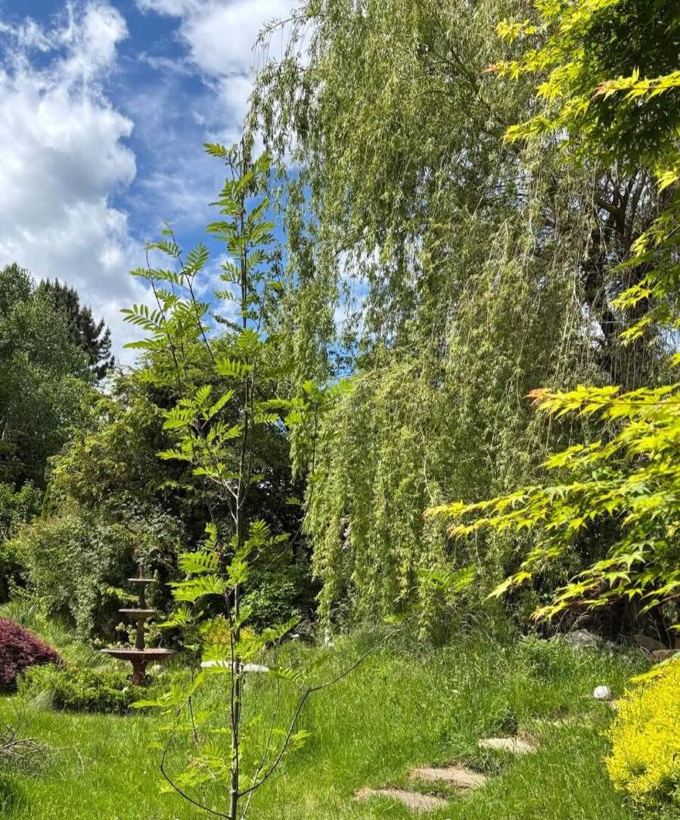
Tall, unmown grass with a stepping-stone path, behind it a young rowan tree, the drooping branches of a weeping willow and an old well in the wildlife garden
Our wildlife garden
in Feistritz
Shrubs for cover, a stepping-stone path instead of a lawnmower.
Why this is vital

For the hedgehog, the garden is not a hobby. It is its home.

Where there used to be woodland edges and field hedges, there are gardens today. They decide whether a hedgehog gets enough to eat, finds a nest and survives the winter.

“Natural” does not mean “neglected”. A lawn with a thuja hedge is a desert with a wall around it.

75 % of insects have disappeared
3 km travelled per night
10 cm gap in the fence is enough
What it really comes down to

Five things a hedgehog needs to survive

Our board to take away – tap it to read it at full size.
Small steps – big impact

Diversity begins on your doorstep

Cottage garden, pond, kitchen garden – or a balcony with four pots. Every square metre counts.

It works without a garden, too: tap the board to see all the examples at full size.
From our garden in Feistritz

The hedgehog says it himself

Four corners – and what a hedgehog would say about them.

Nature-friendly garden with tall, unmown grass, a young rowan tree and a weeping willow
“I am an insect eater: beetles and larvae! About 80 % of my food has been wiped out, so I am always hungry!” Food. Tall grass is not neglect – it is the larder.
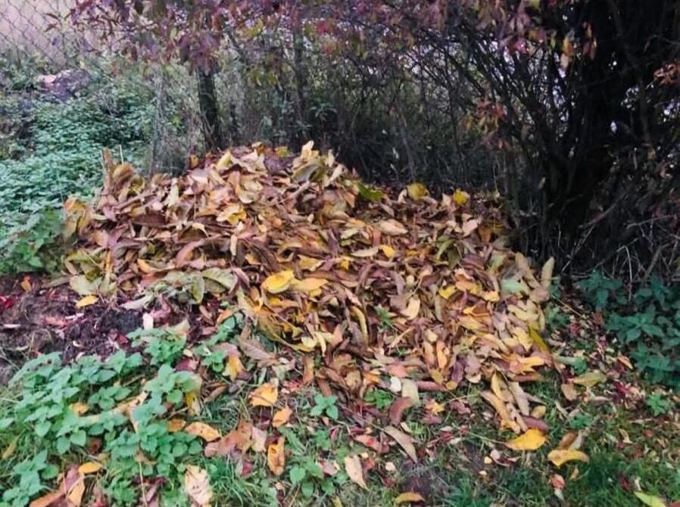
Large pile of autumn leaves under a hedge by the fence, surrounded by ivy and grass
“I need leaves for my nest!” Shelter. Piled up in October – and not touched since.
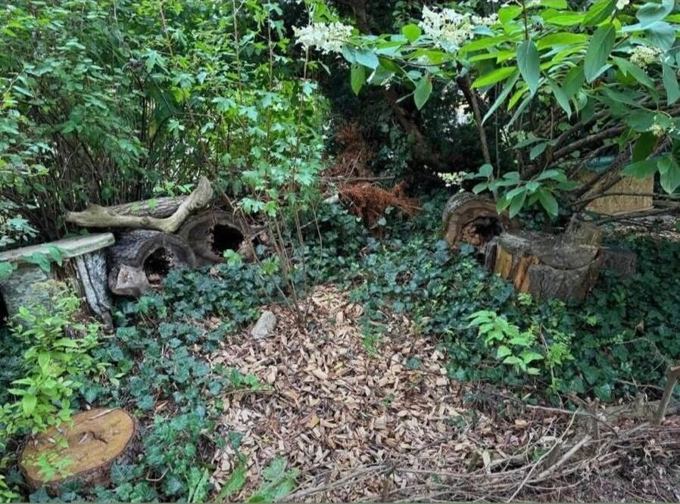
Wild garden corner with hollow tree trunks, deadwood, ivy and bark mulch in the shade of shrubs
“Leave me a wild corner in the garden so I can hide!” Cover. A hollow trunk, deadwood, ivy on top. Never tidied up.
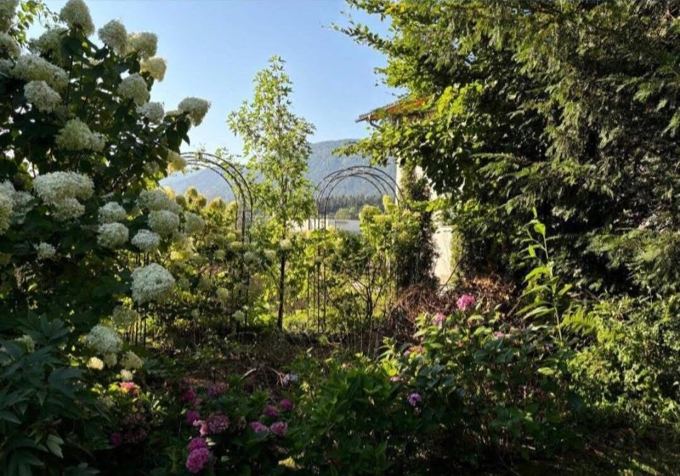
Flowering wildlife garden with hydrangeas, rose arches and a view across the Drau valley to the mountains
“I am a species that lives alongside people, and I live in your garden under bushes and hedges!” Habitat. Well kept and still full of hiding places.
To build yourself

The building blocks of a natural garden

Eight elements – more is always better than fewer.

Large pile of autumn leaves under a hedge by the fence, surrounded by ivy and grass approx. 1.5 m wide · 60 cm high

Leaf pile

Winter quarters and larder in one.

  • Choose a shady corner nobody walks into
  • Pile loosely and weigh down with branches
  • Ready from October – and then leave it in place for good

A leaf pile is not rubbish. It is a bedroom.

Loosely layered brushwood pile of branches and dry leaves under a dense hedge, with ferns and green plants beside it loosely layered · never rearrange

Brushwood pile & deadwood hedge

Shelter from rain, cover by day, a nursery in summer.

Hedgehogs need brushwood piles as shelter from the rain – underneath they find a dry hiding place.

  • Don’t shred your cuttings – layer them loosely instead
  • Deadwood hedge (Benjes hedge): two rows of posts, 60–80 cm apart, branches in between
  • Coarse branches at the bottom, fine material on top

Over time it comes to life: birds bring seeds, and little by little a real hedge grows out of the deadwood. Only top it up from above. Rearranging or rebuilding it: never.

Dry-stone wall built from flat natural stones without mortar, with open joints and a deadwood log on top no mortar · with cavities

Stone pile & dry-stone wall

Heat store and hiding place – for lizards and toads too.

  • Lay natural stones without mortar and leave the joints open
  • Gravel or sand at the bottom: this creates frost-free cavities
  • Choose a sunny spot and put deadwood next to it
Deadwood hedge of densely layered branches between wooden posts, in front of it a flowering giant hyssop in the meadow 2–3 shrubs per metre

Wild hedge instead of a fence

Instead of thuja and cherry laurel: food, cover and nesting sites.

  • Native shrubs only – no exotic ornamental shrubs
  • Plant in autumn or in frost-free spring weather
  • Mix species and allow undergrowth

No cutting at all! A wild hedge is allowed to grow. The picture shows a deadwood hedge: over the years it turns into exactly this kind of hedge.

Finished, planted stone herb spiral with young herbs, behind it a long stack of deadwood on the meadow mow 2 × instead of 12 ×

Flower meadow, perennials, herb spiral

Winter quarters for insects – and insects are what a hedgehog eats.

  • Leave strips of long grass standing: insects spend the winter in them
  • Don’t cut back perennials in autumn: hollow stems are winter quarters

No carpet of bark mulch, no gravel bed, no peat.

Hedgehog eating from a heavy, light-coloured ceramic bowl with a wide rim shallow · heavy · in the shade

Water and feeding point

The cheapest element with the biggest impact.

  • A shallow ceramic or clay bowl – heavy enough not to tip over
  • Change the water daily and offer it all year round
  • No leftovers, no kitchen scraps

The picture shows a heavy ceramic bowl: one like this stays put, even when a hedgehog pushes against it while eating. A light plastic bowl gets pushed away and tipped over.

Open wooden sleeping house with three curled-up hedgehogs in straw, standing in the shade among green plants shady · dry · under shrubs

Setting up a hedgehog house properly

A house is no substitute for leaves, but it helps where material is lacking.

  • Untreated natural wood, entrance facing away from the weather side
  • Line with leaves and straw – no hay, it goes mouldy

Do not open in winter. Houses from our workshop are available in the shop.

Shelter made of old roof tiles and deadwood against a wall, with flowering foxgloves in front from material you already have

Wild corner & improvised hiding places

The part of the garden where you deliberately do nothing.

  • Old roof tiles, an upturned fruit crate, a board against the wall: done
  • Take one corner out of maintenance for good
  • An open compost heap instead of a bin – check it before turning
What brings us our patients

The dangers we see every season

Almost all the injuries we treat happen in the garden – and could have been avoided.

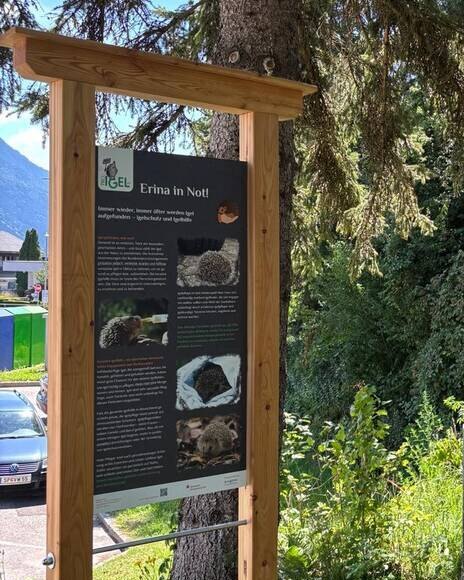
Information board “Erina in Not!” (Erina in trouble!) in a wooden frame on the nature trail: a dark board with photos of hedgehogs and explanatory texts, with a large spruce behind it
Our board “Erina in Not!” (Erina in trouble!) on the nature trail – it shows exactly these dangers.
  • Robotic lawnmowers – hedgehogs don’t run away, they roll up

    Better: switch off at night and at dusk

  • Strimmers & brush cutters – there are nests in tall grass

    Better: search the area first, leave the edges standing

  • Poison & slug pellets – kill the prey and the hedgehog

    Better: don’t use them – hedgehogs and birds keep slugs in check themselves

  • Nets & string – get caught in the spines

    Better: stretch them at least 30 cm above the ground

  • Shafts & pits – traps with no way out

    Better: cover them or put in a board as a ramp

  • Ponds & pools – hedgehogs can swim but can’t get out

    Better: a shallow bank, a stone step or an exit board

  • Fires & burning leaves – a hedgehog may be sleeping in the pile

    Better: leave piles where they are, don’t set them alight

  • Lights left on all night – cost insects, and so food

    Better: warm white, pointing downwards, with a motion sensor

The right time

The hedgehog garden year

The same job can save lives in March and be deadly in November.

Volunteers planting a newly built stone herb spiral in spring, with a stack of deadwood behind it

Spring

March – May
  • Put out a water bowl – the animals wake up starving
  • Leaf piles and brushwood piles stay where they are – don’t touch them now either
  • Pruning trees and shrubs: not at all. From March, birds are breeding and nesting
  • Planting time for native shrubs, perennials and herbs
Illustrative photo: a hedgehog sitting in the tall grass of a meadow

Summer

June – August
  • Nursery nests are hidden! But in summer hedgehogs sleep in tall grass
  • Walk over the area and search it before every mowing
  • Switch off robotic lawnmowers at night
  • From July, young hedgehogs are out and about: check nets, pits and pools
Illustrative photo: a hedgehog searching for food among grass and autumn leaves

Autumn

September – November
  • Leave leaves where they fall or rake them into piles – don’t vacuum them up
  • Leave perennials standing, no fires in the garden
  • Please report small young hedgehogs or ones active during the day
Illustrative photo: a hedgehog walking across a gravel path in broad daylight

Winter

December – February
  • A hedgehog wandering around in winter: catch it straight away and take it to the hedgehog rescue centre!
  • Total peace and quiet: piles, hedges and hedgehog houses stay untouched
  • Leave the snow – it insulates
  • No digging, no scarifying, no clearing
Well meant, but wrong

The seven most common misconceptions

We hear these sentences almost every week – from people who wanted to help.

“A little bowl of milk makes the hedgehog happy.”

Hedgehogs can’t tolerate lactose: milk causes severe diarrhoea. Right: water only, all year round.

“Hedgehogs eat slugs and earthworms.”

If they have to, yes – and they pick up parasites. Right: beetles, larvae, insects from a nature-friendly garden.

“My robotic lawnmower detects animals.”

The sensors are built for obstacles, not for an animal rolled up in a ball. Right: switch it off at night.

“Leaves have to go, or the lawn will go mouldy.”

Leaves are building material, insulation and a habitat for insects. Right: leaves onto beds and into piles, only clear the paths.

“In winter I’d better check that the hedgehog is all right.”

Every disturbance costs energy the hedgehog cannot replace. Right: keep the shelter closed.

“My garden is too small, it won’t make any difference.”

A leaf pile needs two square metres. Right: start small – and get the neighbours’ garden involved.

“A wildlife garden means letting everything run wild.”

Paths, seating areas and mown patches are allowed. Right: one wild zone that is left in peace for good.

Finally: time works for you

A deadwood hedge comes to life over time

Pile it up, leave it, wait. The birds take care of the nicest part of the work.

The pile of branches turns into a hedge all by itself – tap the board to read it at full size.