
1
Hedgehog year
Through the hedgehog year with Erina
Erina’s life from waking up in spring to hibernation.
- Waking up in spring
- Busy summer months
- Getting ready for winter
First, the photo series shows what the trail in Feistritz an der Drau looks like. After that, the 11 boards explain step by step what there is to discover at each station: habitat, food, mating, young, hibernation, dangers and how to help a hedgehog properly.

I’m Erina. First have a look at the photos of my trail – and then I’ll take you through my hedgehog year on all 11 boards, from the first day of spring to hibernation. On screen or outdoors, station by station.
New · Now on
Ten little hedgehogs are hiding on the nature trail! During the day they sleep under bushes and shrubs, in the long grass or in the piles of brushwood and dead wood.
Can you find the hedgehog mum and the hedgehog dad with the red noses – and their eight hoglets?
Have fun searching and discovering!
A hedgehog mum gives birth to up to eight young. She suckles her babies and raises them all on her own – the hedgehog dad does not live with the family, because hedgehogs are solitary animals. After about six to seven weeks in the nest, the little hedgehogs have to manage on their own and go out at night in search of food – ground beetles!
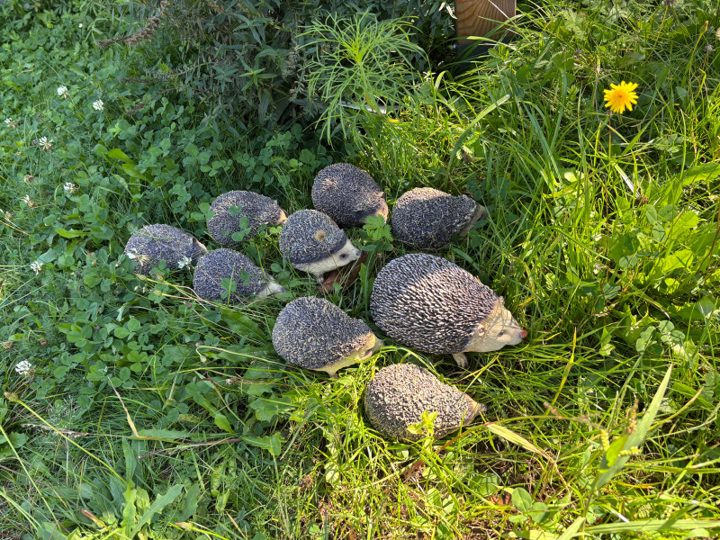
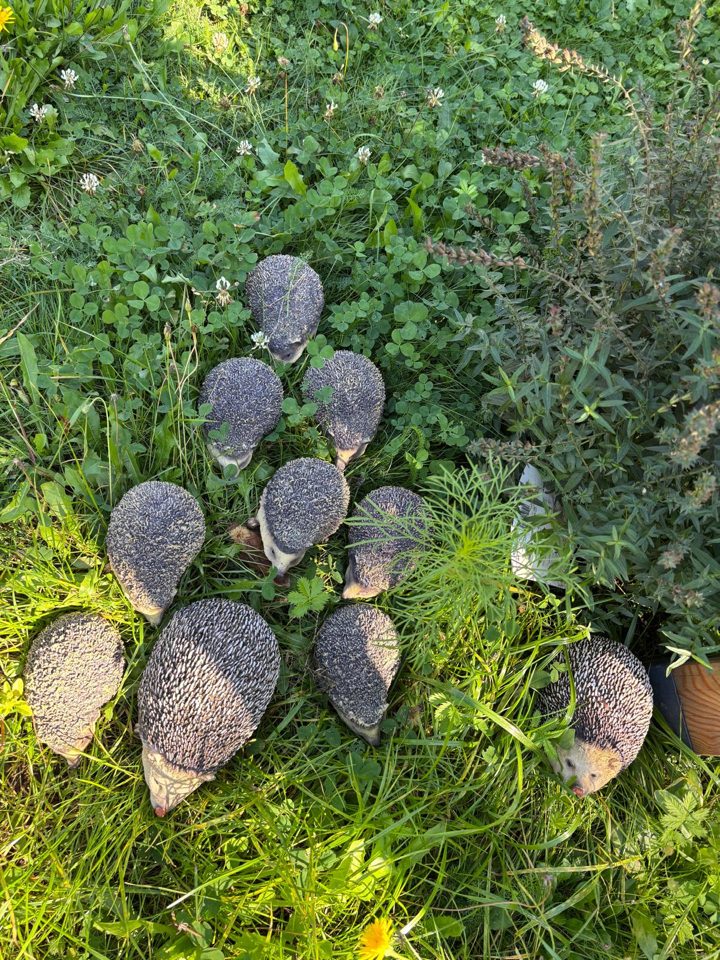
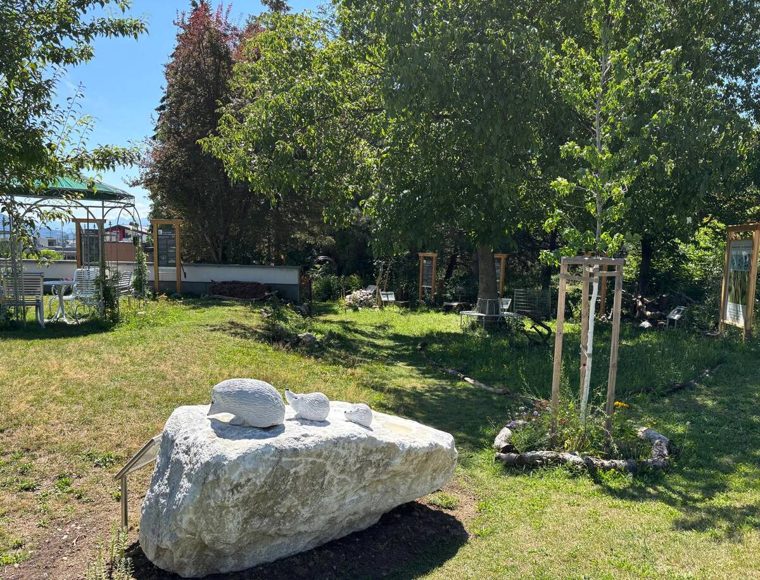
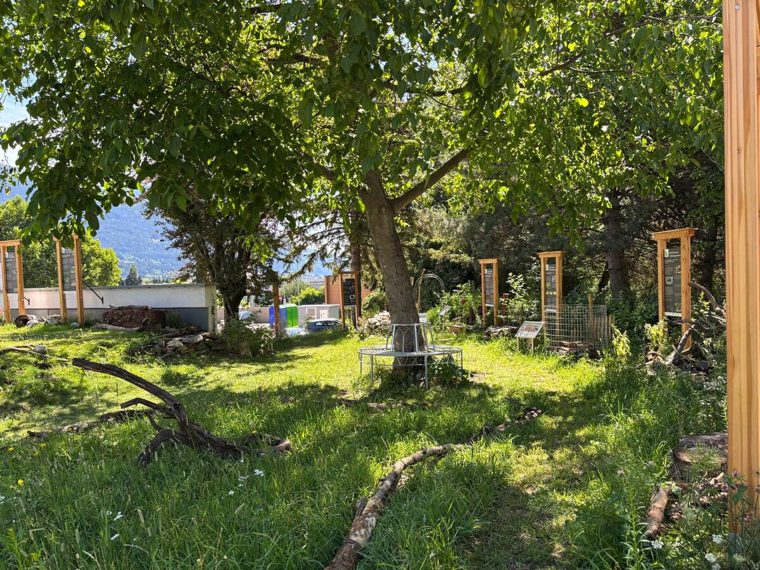
The photos show the stations, boards and natural habitats of the nature trail in Feistritz an der Drau. You can read how each board explains the trail directly below.
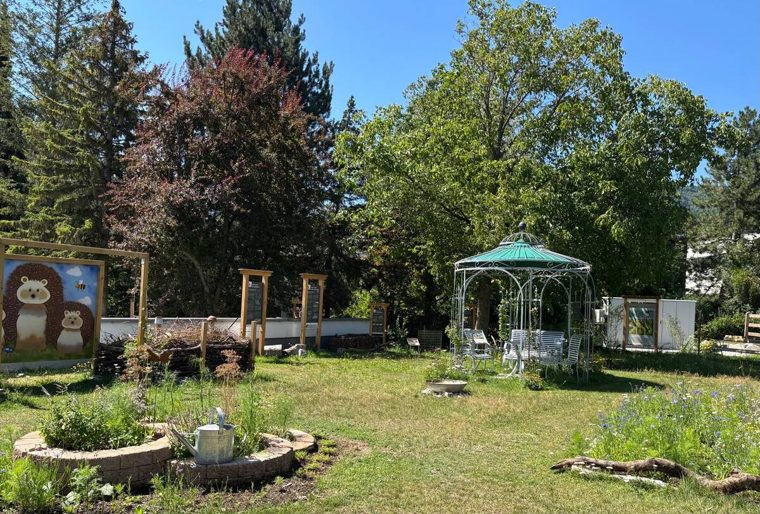
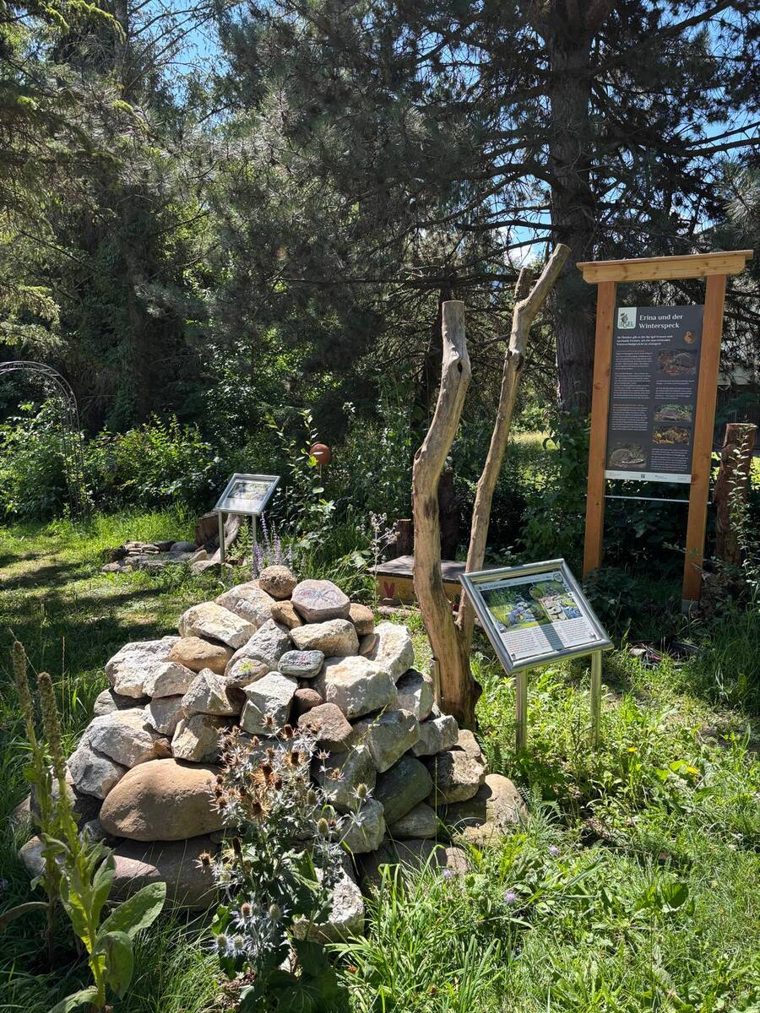
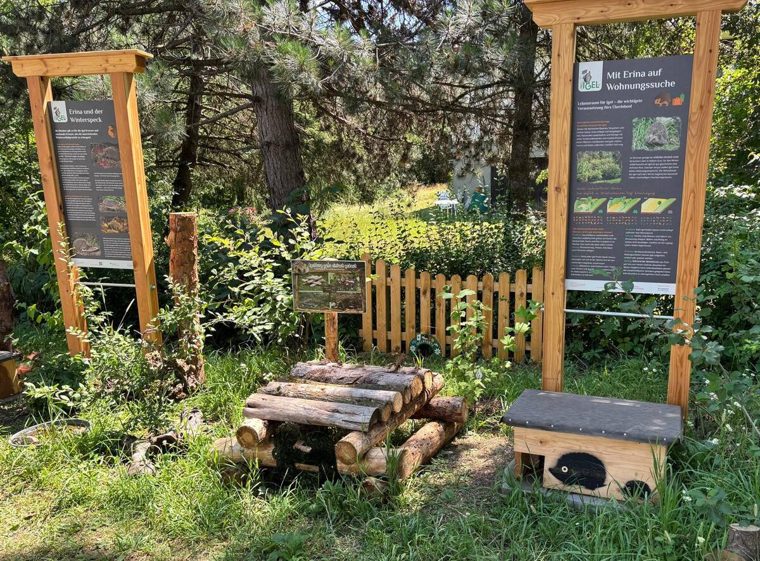
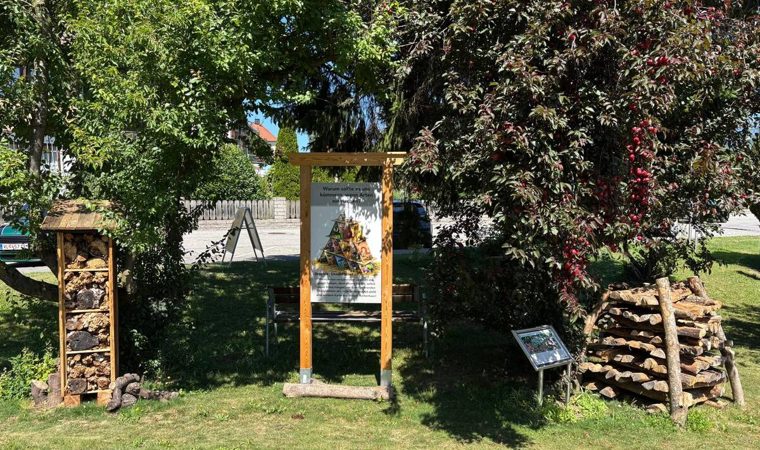
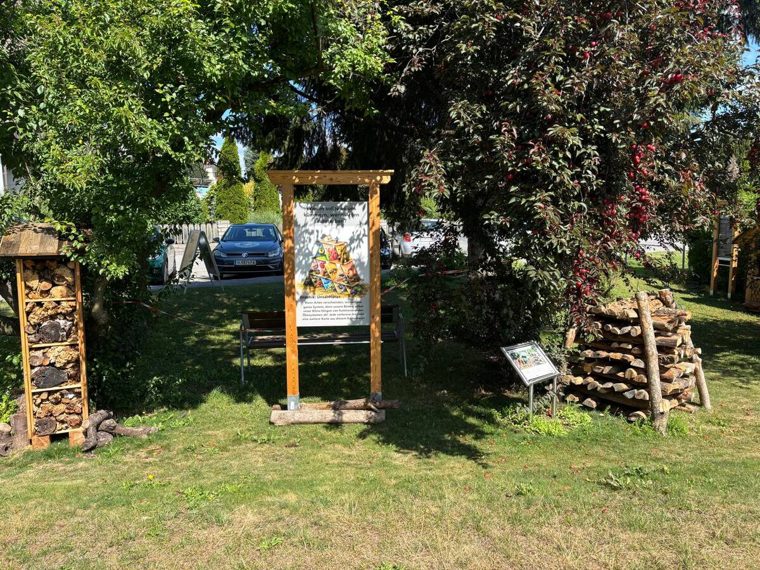
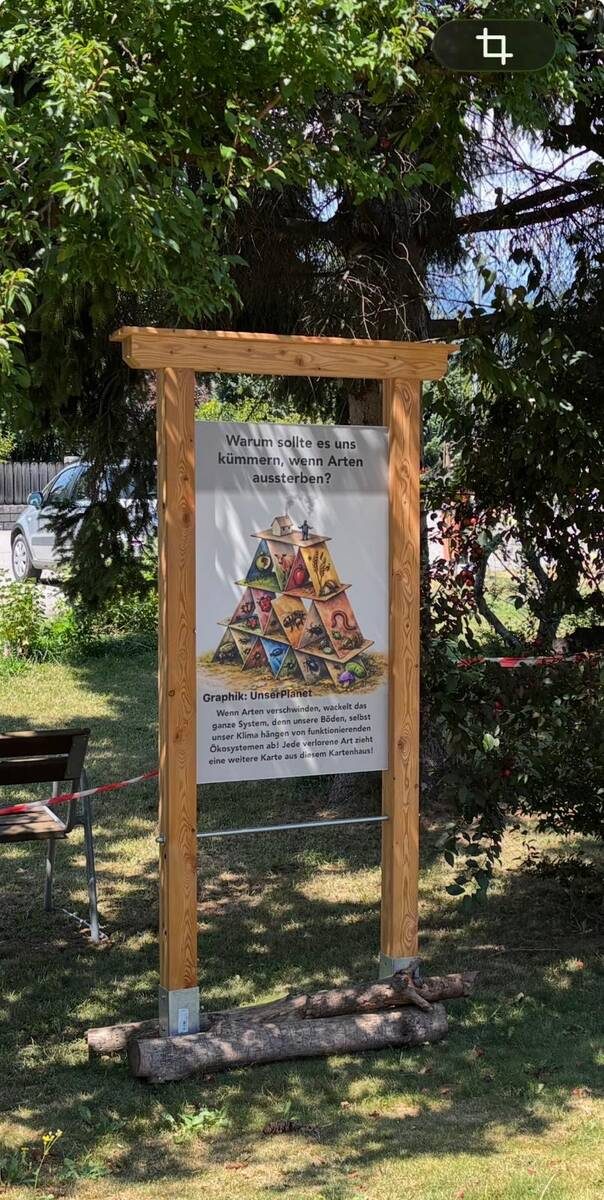
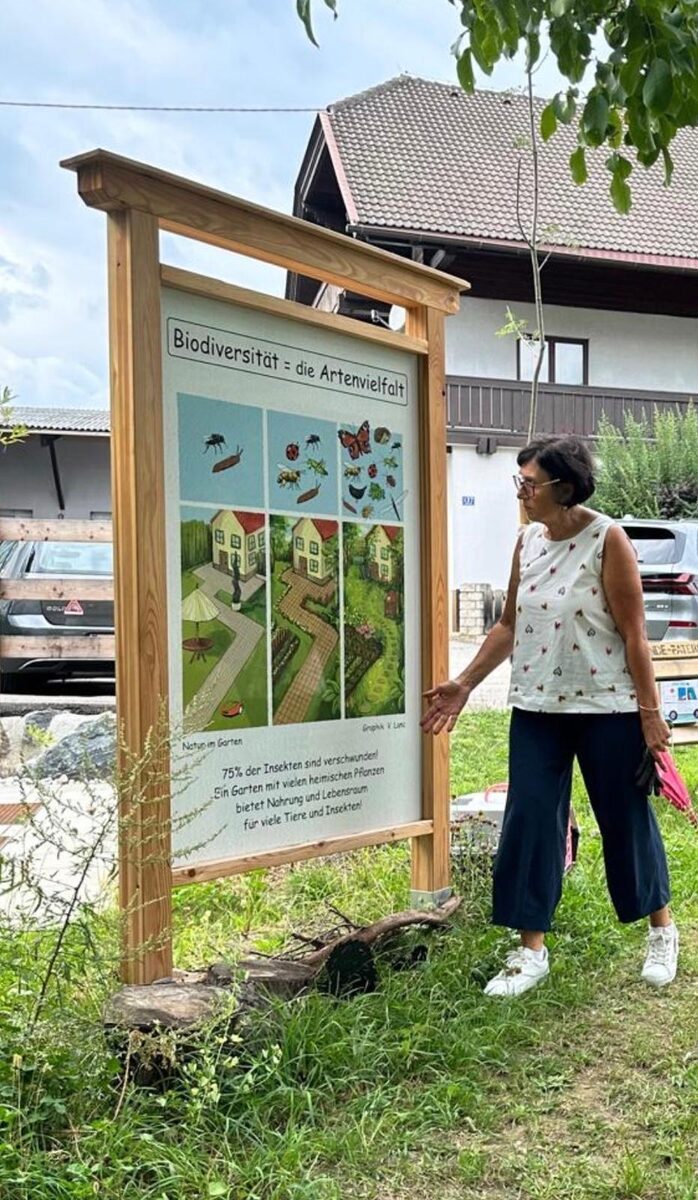
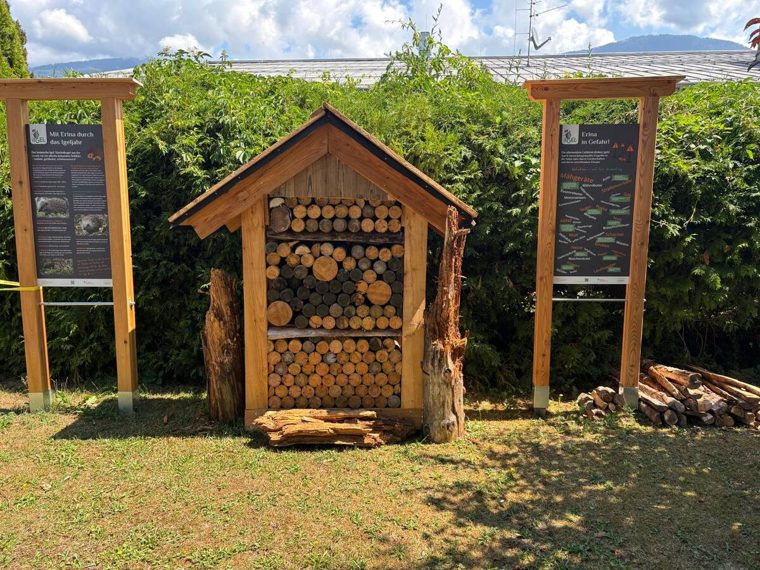
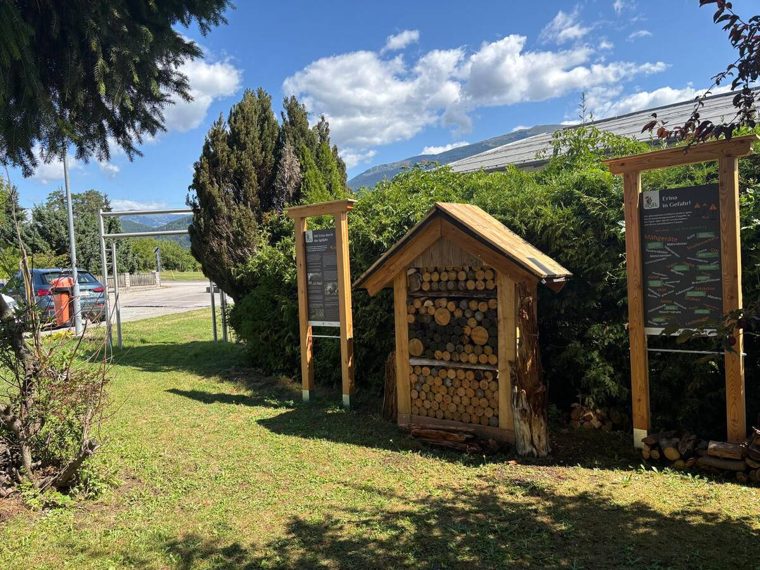
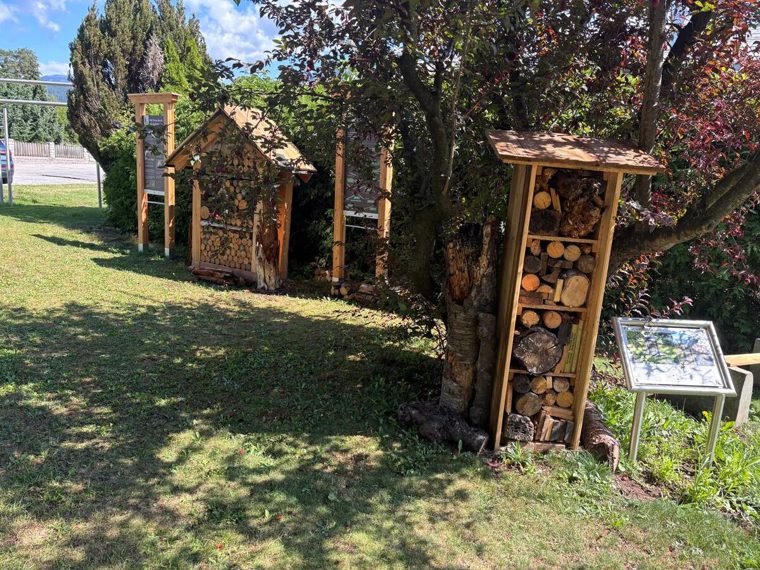
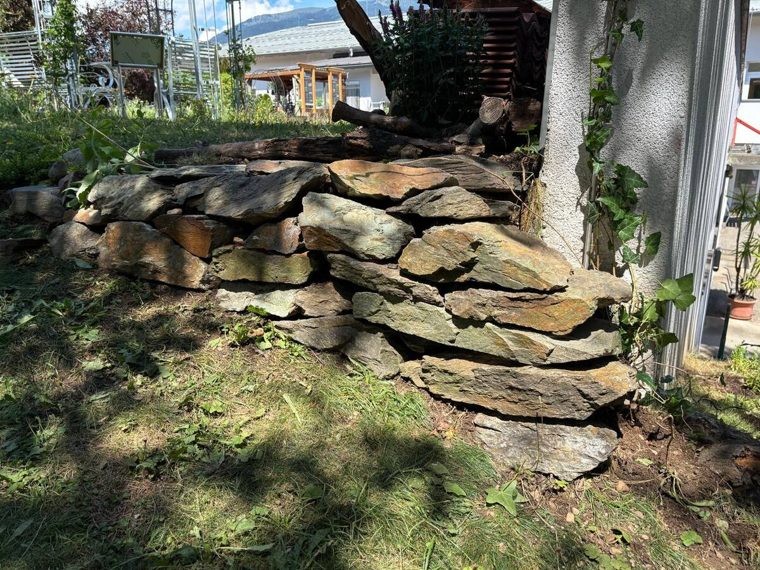
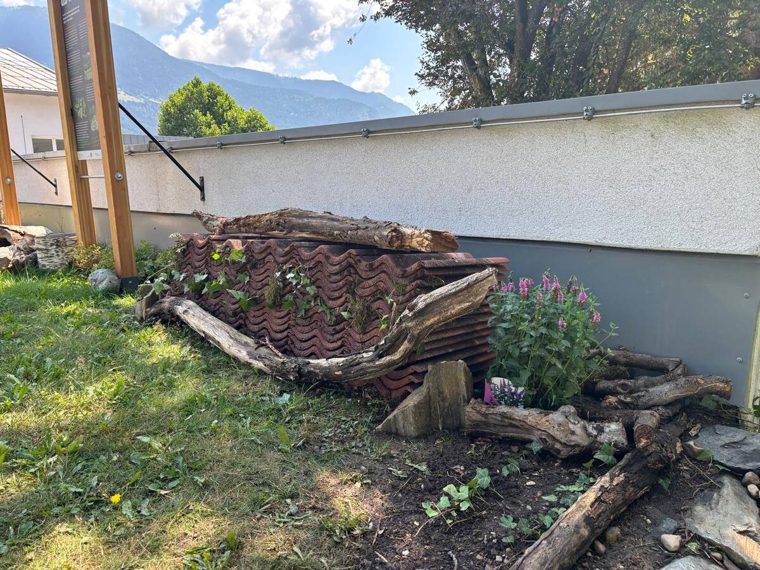
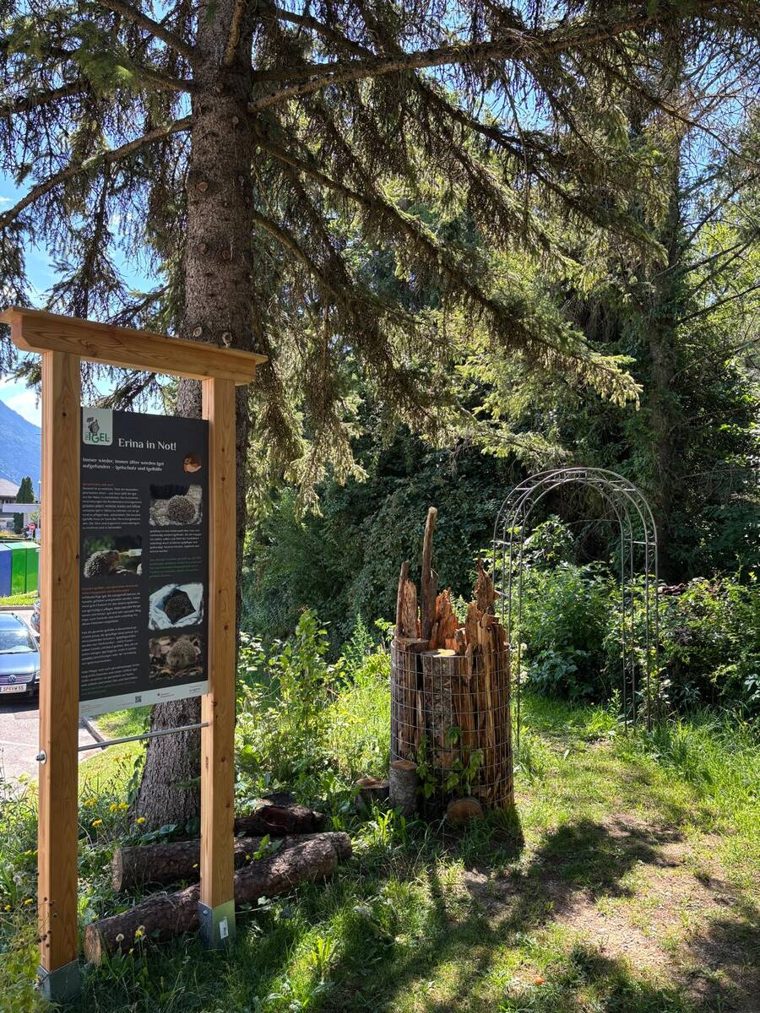
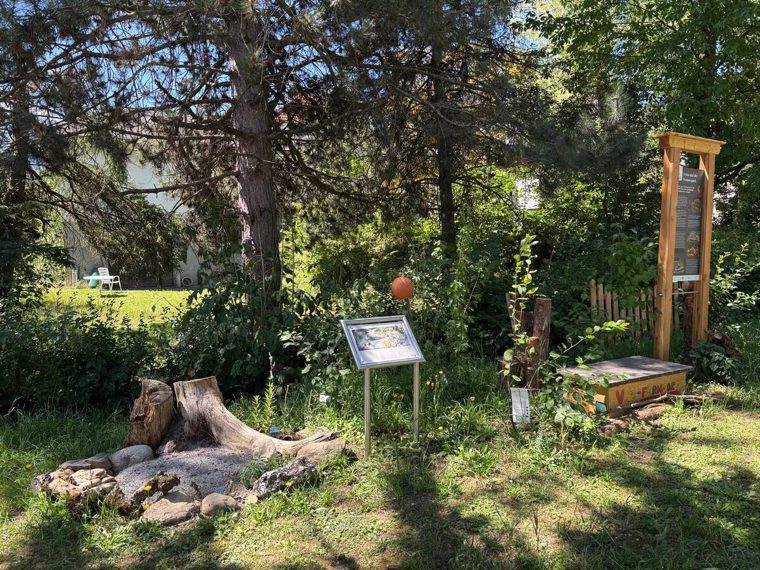
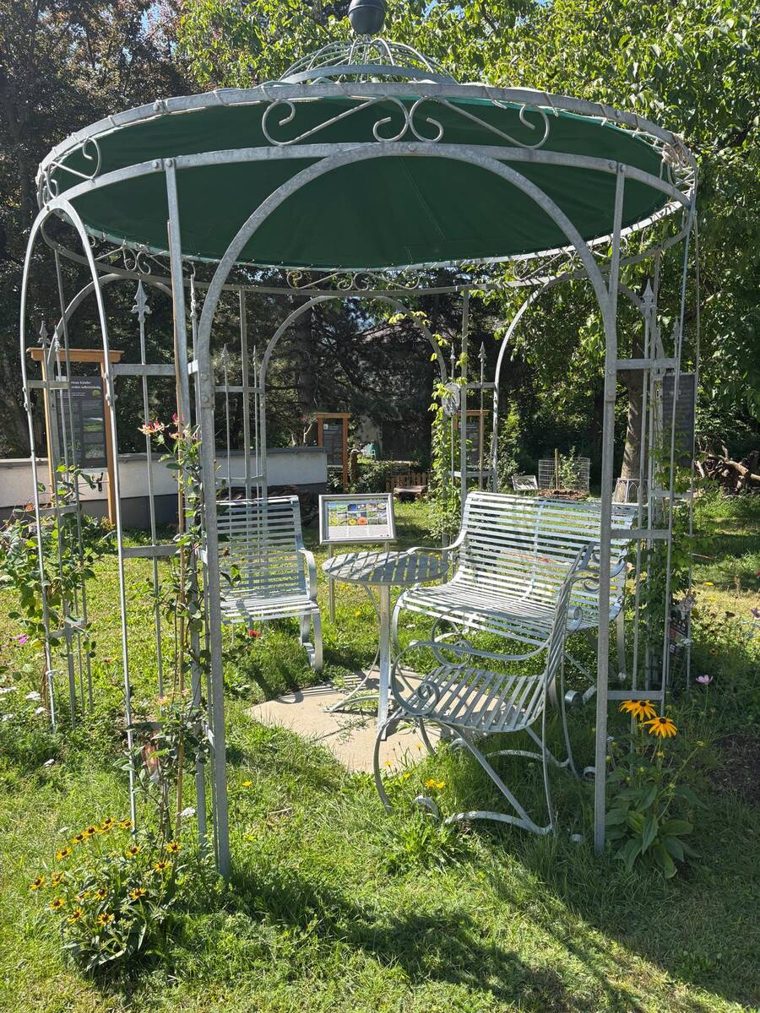
And now the trail explained in boards: each of the 11 stations has its own board. The overview shows them all at a glance, and the detailed boards contain the full text.
From station 1 to 11, Erina takes you through her hedgehog year. Filter by theme or open a board for the full text.
Erina’s life from waking up in spring to hibernation.
Understanding hibernation, winter quarters and rest periods.
The hiding places hedgehogs need for sleeping and hibernating.
When Erina wakes up and becomes active again.
What hedgehogs eat and where they find natural food.
Finding a partner and the mating season in the hedgehog year.
Birth, time in the nest and the first weeks of the young.
The young hedgehogs’ first journeys on their own.
Recognising emergencies and doing the right thing.
Building up energy reserves for hibernation.
Recognising dangers and making the garden safer.
Erina’s life from waking up in spring to hibernation.
Hedgehogs live by the rhythm of the seasons. Erina shows when hedgehogs are out and about, when they have their young and when they prepare for hibernation.
The board gives an overview of the most important stages in a hedgehog’s life over the course of the year.
If you know the hedgehog year, you can help hedgehogs in the right way at the right time.
Back to topUnderstanding hibernation, winter quarters and rest periods.
In the cold season Erina withdraws into a well-insulated nest and greatly reduces the energy she uses.
The board shows why leaves, brushwood and quiet corners of the garden are so important for hibernating hedgehogs.
An undisturbed place to sleep helps hedgehogs get safely through the winter.
Back to topThe hiding places hedgehogs need for sleeping and hibernating.
Over the year a hedgehog needs several safe hiding places. Wildlife-friendly gardens offer the best conditions for this.
The board presents suitable sleeping places and simple ways to create hedgehog-friendly features in the garden.
Many small hiding places together make a safe habitat.
Back to topWhen Erina wakes up and becomes active again.
As temperatures rise, hibernation comes to an end. Erina now has to build up her strength and explore her surroundings again.
The board explains the start of the active hedgehog year and what kind of help makes sense in spring.
A safe start in spring gives hedgehogs strength for the new year.
Back to topWhat hedgehogs eat and where they find natural food.
Hedgehogs are insectivores. They find their natural food most easily in varied, lively gardens.
The board shows Erina’s menu and explains why leaves, dead wood and native plants provide food.
A lively garden is the best larder for hedgehogs.
Back to topFinding a partner and the mating season in the hedgehog year.
During the mating season hedgehogs travel long distances. The striking circling is part of their natural courtship behaviour.
The board explains how hedgehogs find each other and why connected gardens are especially important at this time.
Open, connected habitats bring hedgehogs together.
Back to topBirth, time in the nest and the first weeks of the young.
Hoglets are born blind, with soft, pale spines. In their first weeks they depend completely on their mother.
The board shows how the young develop and explains when human help is really needed.
Peace and quiet and a safe nest are especially important for young hedgehogs.
Back to topThe young hedgehogs’ first journeys on their own.
As they grow older, Erina’s young explore their surroundings and gradually become independent.
The board follows the young hedgehogs on their way to independence.
Young hedgehogs need safe routes to get to know their surroundings.
Back to topRecognising emergencies and doing the right thing.
Not every hedgehog you see needs help. Injured, listless or severely underweight animals, however, must be cared for by experts.
The board explains how to secure a hedgehog, keep it warm and hand it over to an experienced hedgehog rescue.
If in doubt, call first and decide together what to do next.
Back to topBuilding up energy reserves for hibernation.
In autumn Erina is especially active. She eats to build up reserves and at the same time looks for a suitable winter nest.
The board explains why an autumn garden rich in insects and sheltered hiding places are so important.
Natural food and a good nest prepare hedgehogs for the winter.
Back to topRecognising dangers and making the garden safer.
Many dangers to hedgehogs arise unintentionally. Simple checks and small changes can prevent serious injuries.
The board lists typical sources of danger and shows practical ways to protect hedgehogs around the house and garden.
Keeping your eyes open makes the habitat safer for Erina and other hedgehogs.
Back to topWould you like to visit our nature trail in person, with a guided tour or as a school class? If you are interested, please get in touch by e-mail or phone – we are happy to take the time.
What’s happening on the site, in brief – with photos right here. You can find more videos on our Facebook page.
Our hedgehogs are heading into hibernation – and our educational trail is taking a well-deserved winter break! A wonderful, eventful and successful first season (1 June to 31 October 2026) lies behind us.
Over 130 visitors across 4 guided tours, around 150 guests at our opening ceremony and about 100 enthusiastic children in school workshops made this year unforgettable. Most of all, we are thrilled that since launching our website, 35 hedgehogs in need were rescued and placed into care at Bärbel Meißnitzer's station! A heartfelt thank you to all supporters – we look forward to welcoming you back from 1 April 2027!

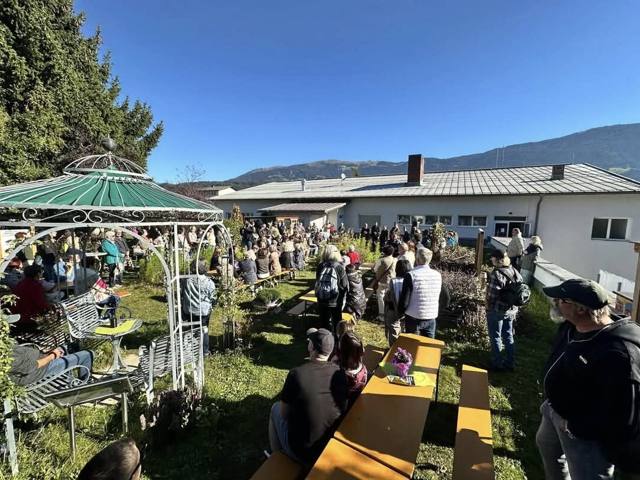
Many people from near and far came to celebrate this special day with us! The quartet of the municipal band opened the event with a brass fanfare. A music class from MS Feistritz delighted everyone with a hedgehog song they had written themselves, a ballad told the story of how our trail came about, and a brass quartet provided the festive musical setting.
Many appreciative words from Mayor Manuel Müller, Member of the Carinthian Parliament, and finally thanks and a blessing by Deacon Korl Peter for our beautiful nature, which we want to protect and preserve together, made the opening a very special experience.
The feature was broadcast on Radio Kärnten on 23 September 2026.
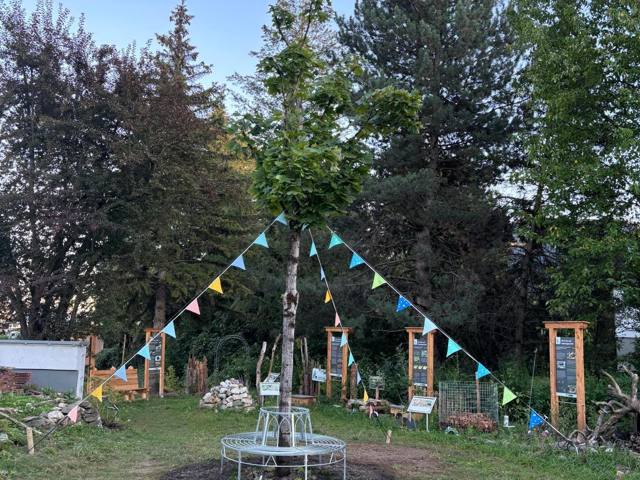
Today we planted a big new tree in the hedgehog park. For hedgehogs a tree is much more than greenery: it gives shade, provides leaves for nests and winter shelters every autumn and attracts insects and birds – exactly what belongs on the grounds.
This recording from MS Feistritz (the local secondary school) shows a night-time visitor completely undisturbed. Observations like this make it visible how hedgehogs explore their surroundings and use sheltered feeding stations.