
♥ 🦔

Real rescue stories.

Every hedgehog that comes to me has a story. Here I tell those stories – honestly, even when they don’t always end well.

Current case

The hedgehog from the cemetery

Some stories begin with someone taking a proper look. This is one of them.

Illustrative photo: a hedgehog searching for food among grass and autumn leaves – exactly where brush cutters become a danger
Illustrative photo – we deliberately do not show the pictures of the injury here.
Cut injury String trimmer / brush cutter Under treatment

“Nobody notices him.”

found at Traun cemetery

A hedgehog drags itself, smeared with blood, along the path of Traun cemetery. Lots of people around. Even on the park bench opposite. Nobody notices him. Or nobody wants to notice him.

A couple walks past and acts immediately. Hedgehog picked up and packed in a box. They looked for help by phone and found it with me.

A typical cut injury from a string trimmer or brush cutter, …
The wounds full of wriggling maggots. Big, fat maggots. Deep wound pockets. Muscles exposed.

Will he make it? No idea. We’re fighting together.

📌

Sensitive content: The wound has already been treated and cleaned here.

What you can take away from this

  • Check before you mow. String trimmers and brush cutters cause exactly these injuries – when in danger, hedgehogs roll up into a ball and don’t run away.
  • Walk through long grass and shrubs first, especially at dusk and in the morning.
  • Look instead of walking on. An injured hedgehog in broad daylight is always an emergency.
Found a hedgehog? Here’s how to help →
Shared story

Came only to leave

Not every story here is my own. This one was shared by a friendly hedgehog rescue station – and it belongs on this page because it shows how much a single day can decide.
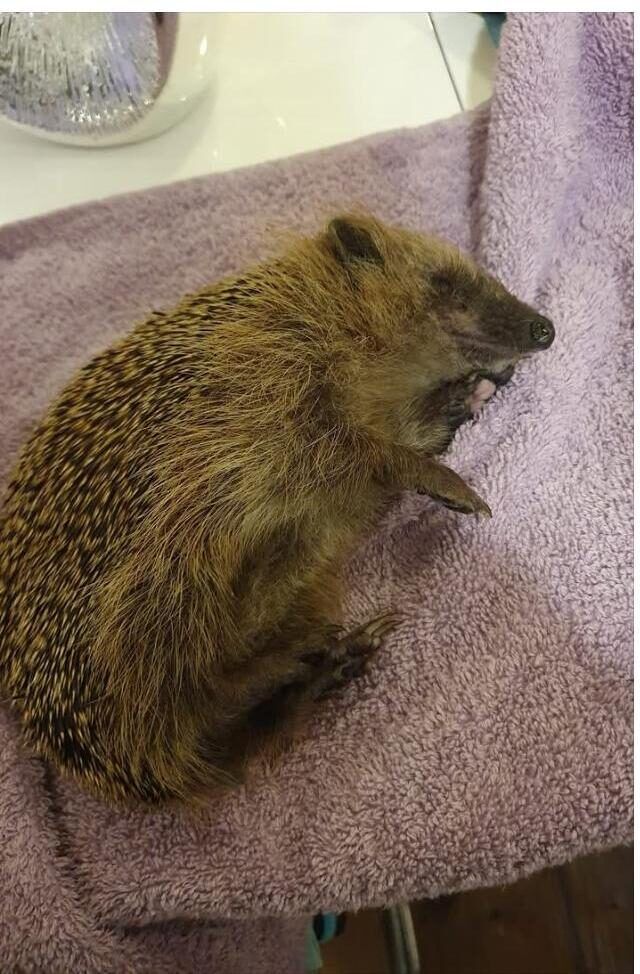
A severely emaciated hedgehog lies limply on a soft towel at the care station
On arrival: only 600 g and shallow, irregular breathing.
Too late Fly eggs Underweight

“It was simply too late.”

arrived in the evening – gone in the night

This hedgehog came to the care station in the evening and died that same night. Only 600 g on the scales, its coat full of fly eggs, its breathing shallow and irregular. There was no time left for treatment.

Fly eggs look harmless – like tiny yellowish-white grains of rice in the spines, fur, wounds, nose or ears. Within a few hours, maggots hatch from them. A hedgehog with fly eggs stuck to it is always an emergency, where it’s not days but hours that count.
Rest in peace, little one.

Why we are showing this story

  • Fly eggs mean: act now. Don’t wait until tomorrow, don’t just watch first – get help that same day.
  • Don’t treat it yourself. No bath, no picking off the eggs, no home remedies. The hedgehog belongs in a box, warm and dry, and then in expert hands.
  • A hedgehog lying flat during the day and not rolling up is seriously ill – regardless of the season or its weight.
  • Even a “late” hedgehog deserves a chance. Some don’t make it. Arriving too late is still better than walking on by.
Found a hedgehog? Here’s how to help →
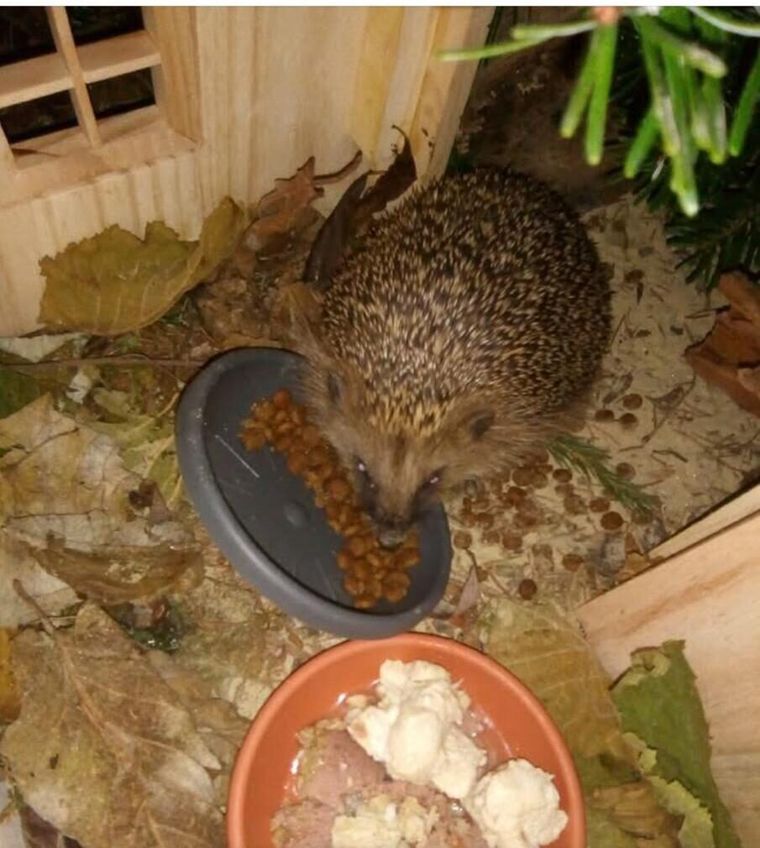
The hedgehog Leo eating from a shallow dish at a sheltered feeding station, with a dish of water next to it

Leo at the feeding station

Many hedgehogs are out and about and urgently need food and water. A sheltered feeding station with a shallow dish and fresh water every day – never milk – helps more than you might think.

Example photo “Leo” · shared by Igelherz

Case report · 27 August 2026

Sugar – 238 grams and one leg too few

Some hedgehogs arrive in such a state that you first have to take a deep breath. And then you get started anyway.
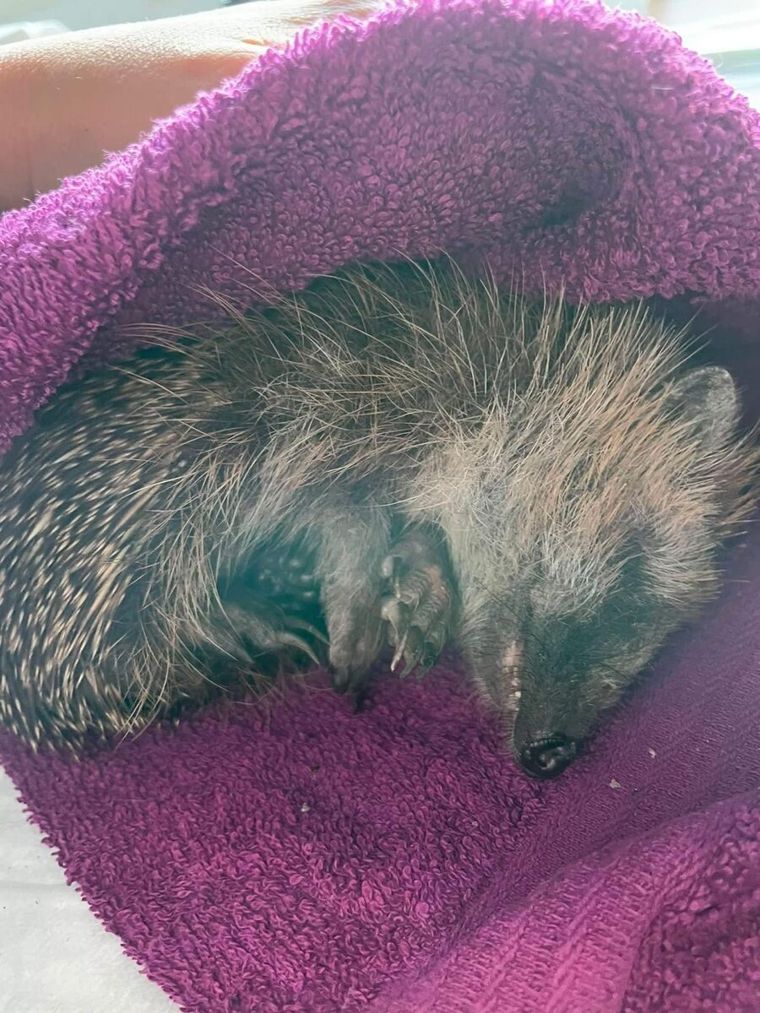
The hedgehog Sugar lies curled up asleep in a soft purple towel on someone’s hand
After the operation: wrapped up warm, cared for – and finally at rest.
Amputation 238 g In care

“Emaciated, half dying of thirst.”

arrived on the evening of 26 August 2026

Sugar arrives in the evening. 238 grams on the scales – far too little for the end of August. Emaciated, half dying of thirst. And then what you see at first glance: the left hind leg almost completely severed.

Nobody knows exactly what happened – the report gives no cause. An injury like this can come from a mower, a piece of string, a net or a trap. For Sugar it made no difference: the little leg was amputated straight away.

Now Sugar has the chance of a good life.

📌

Sensitive content: We only show the photo of the injury when you click – you decide whether you want to see it.
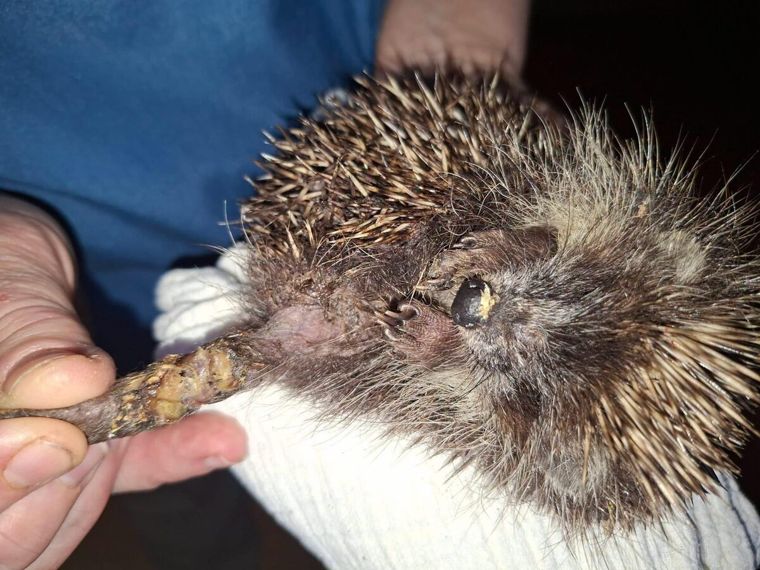
View photo of the injury
Sugar being held on a towel, the badly injured left hind leg clearly visible
The left hind leg before the operation. Injuries exactly like this are the reason why a hedgehog in broad daylight is never “just out for a walk”.

What you can take away from this

  • 238 g in August is far too little. A hedgehog this light that is out during the day is always an emergency – not just in autumn.
  • Half dying of thirst means: water. A shallow dish of water, nothing else. Never milk – it causes fatal diarrhoea.
  • Don’t treat wounds yourself. No bath, no ointment, no bandage. Put it in a box somewhere warm, dark and quiet – and then straight into a vet’s hands.
  • A missing leg is not a death sentence. Whether a hedgehog can be released again or stays in permanent care is decided jointly by the vet and the care station.
Found a hedgehog? Here’s how to help →
Shared story · 21 August

Six babies under the garden shed

This story has a happy ending. It’s here anyway – because it shows how quickly a perfectly ordinary day of tidying the garden can turn into an emergency.

A mother hedgehog lies tightly curled up in a wooden box with her young, who are suckling from her
Together again: the hedgehog mum with her young in the care box.
Reunited 6 babies Nest destroyed

“We’ve got the mother!”

found in the evening – reunited the next morning

A phone call in the evening: in the neighbourhood, a garden shed had been removed. Underneath it was a hedgehog nest with six babies. No sign of the mother.

Daniela takes the little ones in for the time being, looks after them and feeds them – with the help of Peter Igel and Chrissi Stübinger. And the neighbours are given a job: to keep an eye out for whether the hedgehog mum comes back.

Then, the next morning, the call everyone was hoping for. The mother is there. Six baby hedgehogs who had already been thought of as orphans are now growing up with her – the best thing that could have happened to them.
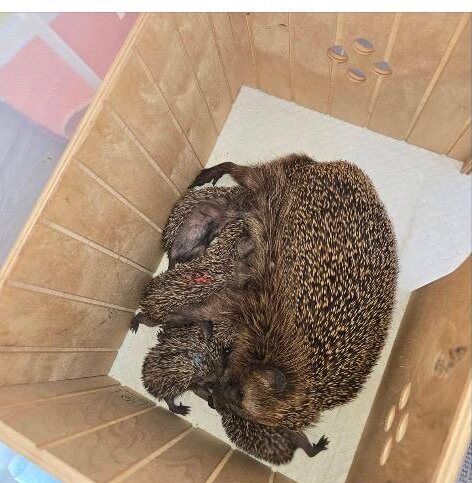
Then this morning the call we’d been hoping for: we’ve got the mother!

Why we are showing this story

  • Check before you demolish. From April to September there are hedgehog nests under garden sheds, woodpiles, brushwood heaps and compost heaps.
  • An intact nest stays where it is. Don’t touch it, don’t move it, don’t “bring it to safety” – the mother often won’t accept the young afterwards.
  • If the nest is destroyed, warmth is what counts. Baby hedgehogs cool down in no time at all. A warm box, a hot-water bottle wrapped in a towel – and get help straight away.
  • Never cow’s milk. Baby hedgehogs need special rearing milk at short intervals. That belongs in trained hands, not in the kitchen.
  • Keep looking for the mother. Even if the little ones are already being cared for: growing up with their own mum beats any care station.
Found a hedgehog? Here’s how to help →
A mother hedgehog and her young lying close together on a paper towel pad in a wooden box

Six at once

This is what a hedgehog litter looks like when things have only just turned out well. Six young are nothing unusual for a hedgehog mother – and that’s exactly why it pays to look under every shed before the digger arrives.

Shared post · Peter Igel
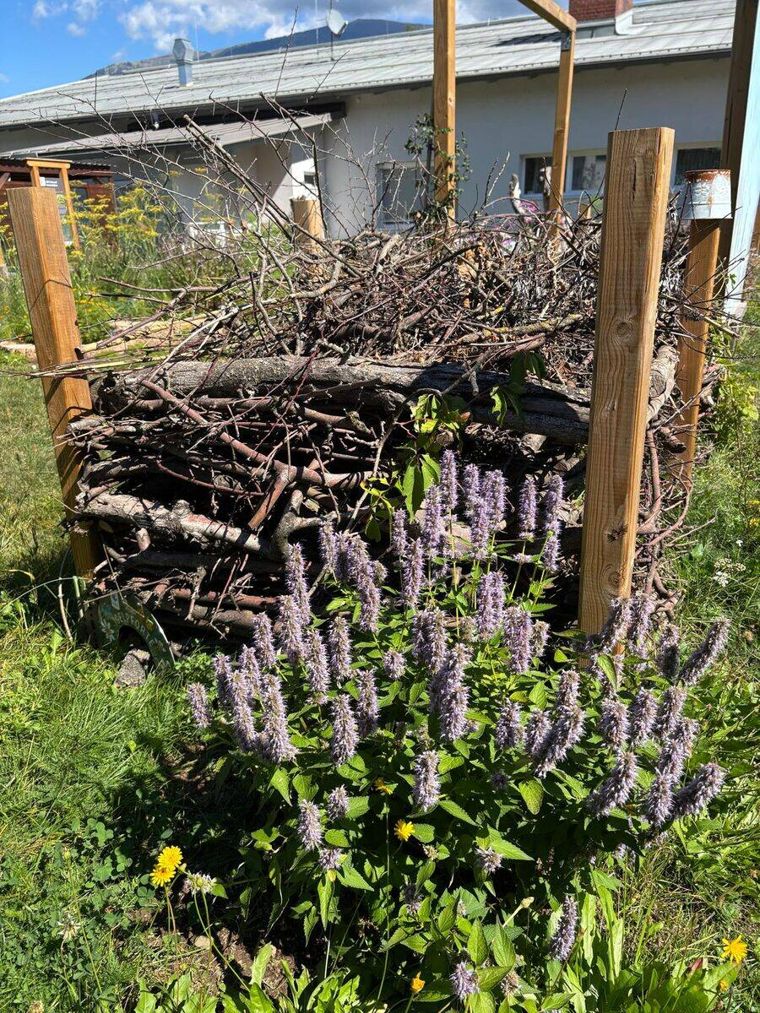
A stacked deadwood hedge between wooden posts in a garden, flowering anise hyssop in front and, at its base, a hand-painted green sign reading Igelpforte (hedgehog gate)

A shelter that stays

A deadwood hedge with a small hedgehog gateway at its base is the opposite of a garden shed: it doesn’t get torn down, it can simply stay where it is. Stack up branches, leave leaves in between, leave it in peace – that’s all it takes.

Shared photo · photographer unknown

Shared story · 6 September 2026

Cinnamon, Sugar, Salt, Pepper, Caraway and Oregano

Six baby hedgehogs named after spices – and a story about how the work goes on even when you have just lost a hedgehog.
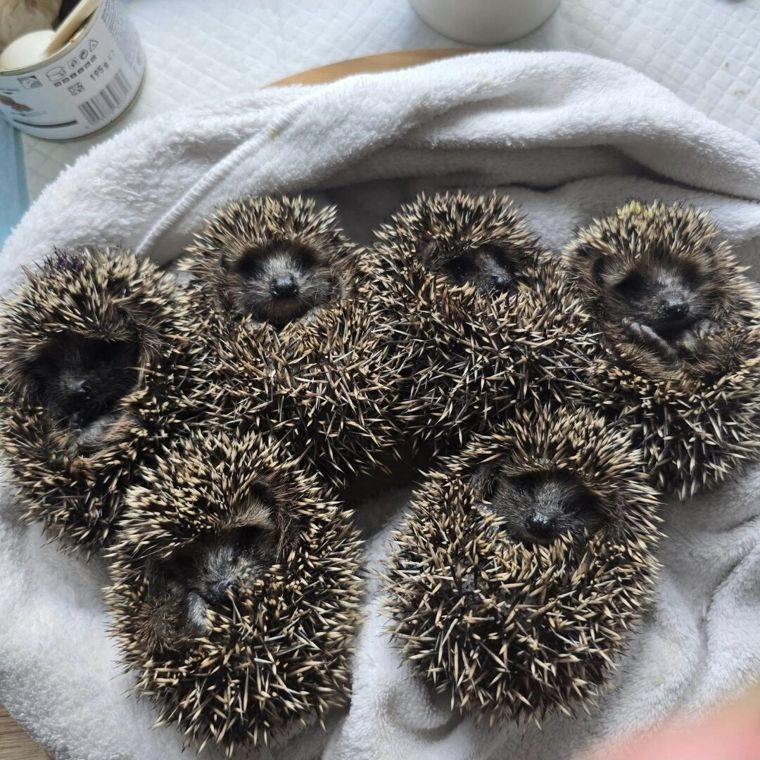
Six young hedgehogs lie curled up close together in a soft white towel at the care station
Six on one towel: two girls and four boys, 99 to 119 grams on arrival.
6 orphans 99–119 g Mother never came back

“We had to keep going.”

watched in the garden for days – then brought to the care station

Shortly before, Peter Igel had lost a hedgehog called Hero – despite every effort. There was no time to pause: the next six needed help.

Cinnamon, Sugar, Salt, Pepper, Caraway and Oregano had been seen again and again in the garden for long periods, alone and twittering. A twittering baby hedgehog is calling for its mother – if you hear that, you are hearing a cry for help.

Only once it was clear that the mother was not coming back were the little ones brought in. Two girls and four boys, weighing between 99 and 119 grams on arrival – far too light to get through a September on their own.

We had to keep going, because the next babies needed help.

Why we are showing this story

  • Twittering is an alarm signal. Baby hedgehogs wandering around alone during the day, squeaking or twittering, are looking for their mother. That’s not a stroll, that’s a cry for help.
  • Watch first, then step in. Watch from a distance for an hour or two to see whether the mother comes. If she does, the nest is the best place in the world – better than any care station.
  • If she stays away, hours count. Waiting as long as in this case was only possible because someone was really paying attention. Once it’s certain that the mother isn’t coming, the little ones belong in a warm box – and then in expert hands.
  • Around 100 grams means: unable to survive alone. Baby hedgehogs of this weight need rearing milk at short intervals, warmth and monitoring. Never cow’s milk, never on your own initiative.
  • Not every story ends well – and still it goes on. Hero didn’t make it. All the more reason why six others deserved a chance.
Found a hedgehog? Here’s how to help →
From Bärbels Igelstation · 13 September 2026

It still had its whole hedgehog life ahead of it

This story is short. It lasts a day and a night – and it could have been avoided.

Illustrative photo: a hedgehog sitting in the long grass of a meadow – exactly where brush cutters and robotic mowers become a danger
Illustrative photo – long grass is hedgehog territory. We only show the photo of the injury when you click.
Did not survive Hind leg severed Brush cutter / robotic mower

“A clean, razor-sharp cut.”

found in broad daylight – gone that same night

A young little hedgehog had dragged itself in broad daylight, with great effort, into the garden of a hedgehog lover. That alone is an alarm signal: a hedgehog that is out during the day and visibly struggling is always an emergency.

When it was examined at the station, the full extent of the injury became clear. A hind leg had been severed – by a clean, razor-sharp cut. Not a bite wound, not an accident with a car. Only a blade does something like that.

Exactly what happened can no longer be proven. But the clues are clear: two days earlier, the sound of a brush cutter had been heard in the neighbouring garden, and in another garden a robotic mower is in use.

The little hedgehog died that same night. Between the cut and the day it was found lay two days – two days it had to get through alone with this injury. It still had its whole hedgehog life ahead of it.

Please check before you mow. A look into the long grass costs nothing.

📌

Sensitive content: We only show the photo of the injury when you click – you decide whether you want to see it.
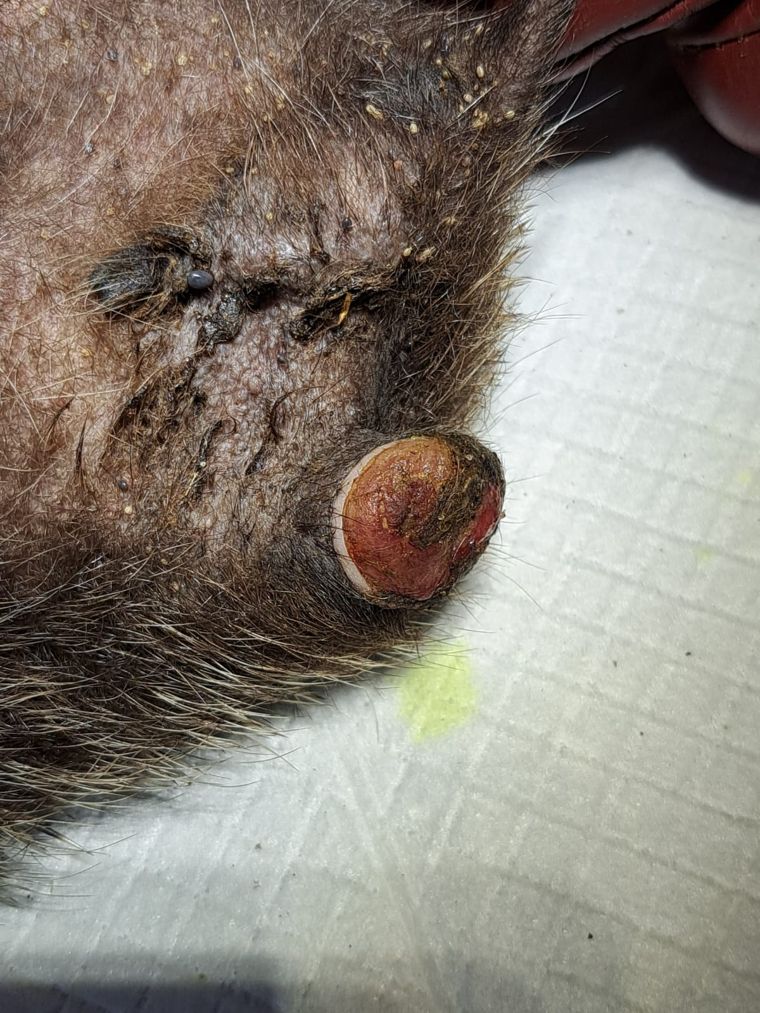
View photo of the injury
Close-up of the young hedgehog during the examination: the hind leg ends in a smooth, round cut surface
The smooth cut surface on the hind leg. This is exactly what it looks like when a mower catches a hedgehog – and that is exactly why we are showing this picture.

What you can take away from this

  • Check before you mow. Search long grass, hedges, shrubs and piles of leaves carefully – slowly, on foot and with your eyes, not with the machine.
  • Hedgehogs don’t run away. When in danger, they roll up into a ball and stay put. That is exactly what makes brush cutters and string trimmers so deadly for them.
  • Never run robotic mowers at dusk or at night. That’s when hedgehogs are out and about. Mow during the day, switch off at night – and look over the area first.
  • Do the edges last and carefully. The nests are under hedges, along fences and walls. Better to leave a corner standing than to cut too low even once.
  • An injured hedgehog is an emergency – right away. Don’t wait until tomorrow. Put it in a box somewhere warm, dark and quiet, no bath, no ointment, no food – and then into expert hands.
Found a hedgehog? Here’s how to help →
More stories

From my diary

I remember every hedgehog that passes through my doors. Here is a selection for you.

ReleasedAdult

Stachelhans

June 2024

Hit by a car, found at the roadside. After 6 weeks of rehabilitation, back to freedom.

950 g on admission6 weeks
ReleasedYoung hedgehog

Trio

September 2024

Three siblings separated from their mother. Cared for together and released as a team in spring.

3 animals4 months
In careBaby

Pico

August 2025

Eyes still closed, found alone in a garden. Being fed with a syringe.

62 g on admissionongoing …
ReleasedAdult

Frieda

October 2023

Underweight in autumn: 380 g.

ReleasedAdult

Bruno

May 2024

Injured by a robotic mower – luckily only superficially. Healthy again after 3 weeks of wound healing.

820 g3 weeks
In memory

Little Hilde

July 2024

Severely injured by a brush cutter – had to be put to sleep.

♥ in memory

Every hedgehog that can be set free again is a little miracle – and at the same time a duty to keep going. — Ursula Ertl, chairwoman

Help us write more stories.

Donate, become a sponsor or lend a hand as a volunteer – every kind of help counts.

Help now →